


Recognizing post-car accident TBI symptoms early is what separates a documented injury from a disputed one, and Michigan’s insurance deadlines make that timing matter twice over. At Christensen Law, we see too many files where the first two weeks contain nothing but a note about neck pain. Getting evaluated is both a health decision and a practical one.
What Are the Signs of a Brain Injury After a Car Accident?
The most common signs are headache, sensitivity to light or noise, trouble concentrating, disrupted sleep, and unusual irritability, and they often appear a day or more after the crash rather than at the scene. Any of them warrants a medical evaluation, even if you walked away feeling fine.
- Symptoms are frequently delayed by hours or days.
- You do not have to hit your head, or lose consciousness, to have a brain injury.
- Family members usually notice cognitive and mood changes first.
Key Takeaways about Signs of a Brain Injury After a Car Accident
- Brain injury and concussion symptoms after a crash commonly emerge with a delay rather than immediately
- Rapid acceleration and deceleration can injure the brain without any direct blow to the head
- Emergency CT imaging is designed to detect bleeding, not diffuse injury
- Neuropsychological testing measures function and can identify deficits that imaging misses
- Michigan no-fault law imposes a one-year notice requirement on injury claims
How a Crash Injures the Brain Without a Head Strike
The brain sits in fluid inside the skull, and a sudden change in speed moves it independently of the bone around it. That motion alone can bruise tissue and stretch the long nerve fibers that connect regions of the brain.
This is why drivers with no scalp wound and no memory gap still turn up months later with real cognitive deficits. The mechanism does not require impact, only force.
The National Institute of Neurological Disorders and Stroke describes a concussion as a transient alteration of brain function following exposure to external physical forces, and notes that symptoms lasting weeks or longer are known as post-concussion syndrome.
What Symptoms Should You Watch For?
Watch for change rather than for a specific symptom, because brain injury presents differently in different people. Symptoms are grouped into four categories worth knowing.
- Physical: headache, dizziness, nausea, fatigue, blurred vision, sensitivity to light or sound
- Cognitive: trouble concentrating, memory lapses, word-finding difficulty, slowed thinking
- Emotional: irritability, anxiety, low mood, uncharacteristic emotional reactions
- Sleep: sleeping much more or much less than usual, difficulty falling asleep
Certain signs call for immediate emergency care rather than a scheduled appointment, including worsening headache, repeated vomiting, seizures, weakness in a limb, unequal pupils, or increasing confusion. When in doubt, treat a worsening symptom as urgent.
What TBI Testing Happens After a Crash?
Testing follows a sequence, and each step answers a different question. Understanding which test does what helps explain why an early normal result proves less than an insurer will later suggest.
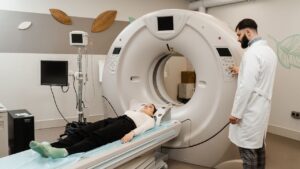
In the emergency department, clinicians score the Glasgow Coma Scale and usually order a head CT. The CT reliably finds skull fractures and bleeding that require surgery, and it is often normal in the most common form of brain injury.
MRI comes later and detects some injuries that a CT cannot. Neuropsychological testing, typically weeks after the crash, measures memory, attention, processing speed, and executive function against expected performance.
Vestibular and vision assessments round out the picture where dizziness or visual symptoms persist. Our overview of how a TBI is diagnosed and treated goes through these stages in more detail, and the various types of brain injury call for different testing.
Why Michigan Deadlines Make Early Evaluation Urgent
Michigan’s no-fault system runs on short clocks that begin the day of the crash, not the day symptoms are recognized. Under MCL 500.3145, written notice of the injury generally has to reach the insurer within one year.
The same section limits recovery of benefits to expenses incurred within one year before a lawsuit is filed. A person who dismisses symptoms for eight months has already lost ground that no amount of later documentation can recover.
There is a practical dimension too. A gap between the crash and the first mention of cognitive symptoms is the single most common argument insurers use to attribute a brain injury to something else.

FAQs for Post-Car Accident TBI Symptoms
These are the questions Michigan drivers and passengers ask us most often in the weeks after a crash.
It can be both, and the two frequently occur together because the same force affects the neck and the brain. If cognitive or mood symptoms are present alongside neck pain, mention them specifically at your next appointment.
Most emerge within the first week, though some become obvious only when a person returns to demanding work or school. Late recognition does not mean the injury is unrelated.
Yes. Children may not describe symptoms in recognizable terms, so caregivers should watch for changes in play, mood, school performance, and sleep, and a pediatric evaluation is appropriate.
It helps a great deal. Dated notes about headaches, missed tasks, and sleep problems give a physician details that memory cannot supply months later.
Ask for the denial in writing, keep the appointments, and keep submitting the bills. A refusal is a position, not a final answer, and it can be challenged.
Talk With Us About Your Crash Injury
If something has felt different since your crash, that is worth taking seriously now rather than after a deadline passes. We will look at your records and tell you honestly what they show.
Call Christensen Law at (248) 900-9000 or use our contact page. Our Michigan brain injury attorneys represent injured people throughout the state.