



What Michigan Motorcycle Laws Should Every Rider Know?
Michigan riders should understand helmet rules, insurance requirements, endorsement laws, and rules of the road, because these laws affect both your safety and your ability to recover money after a crash.
- Helmets are optional only if you are 21 or older and meet specific insurance and endorsement rules.
- A motorcycle endorsement on your driver’s license is required before you can ride on public roads.
- Motorcycles are excluded from Michigan’s no-fault auto system, so different insurance rules apply.
- Lane splitting is illegal across the state.
Riding a motorcycle through Michigan, whether you are cruising along Woodward Avenue or heading north toward the Mackinac Bridge, comes with freedom most drivers will never feel. It also comes with responsibilities that are very different from the rules that drivers of cars and trucks follow.
The Michigan motorcycle laws you should know cover helmets, insurance, licensing, equipment, and how riders are treated on the road, and they shape what happens if you are ever hit by a vehicle.
Key Takeaways about Michigan’s Motorcycle Laws
- Michigan allows riders 21 and older to ride without a helmet only if they meet insurance and endorsement requirements set by state law.
- Riders and passengers under 21 must always wear a DOT-approved helmet.
- Motorcyclists are required to carry liability insurance, but motorcycles are excluded from Michigan’s no-fault Personal Injury Protection (PIP) system.
- Lane splitting and lane filtering are both illegal in Michigan.
- A motorcycle endorsement on the rider’s license is required before riding on any public street or highway.
- Eye protection is required by law, even when a helmet is not.
Does Michigan Require Motorcycle Helmets?
Michigan requires helmets in some situations and allows riders to choose in others. The Michigan motorcycle helmet law generally requires operators and riders to wear a crash helmet, but operators and riders who are 21 or over can go without a helmet if insurance and licensing requirements are met.
Anyone under 21 who operates or rides a motorcycle must wear a helmet. Under MCL 257.658, riders 21 and older may legally ride without a helmet if all of the following are true:
- They have held a motorcycle endorsement for at least two years, or they have passed an approved motorcycle safety course.
- They carry at least $20,000 in first-party medical benefits coverage.
- Their passenger, if any, also has at least $20,000 in first-party medical benefits in addition to the operator’s coverage.
Even when a helmet is optional, choosing to wear one can change the outcome of a crash. A DOT-approved helmet reduces the risk of head and brain injury significantly, which matters in a state where catastrophic injury claims often involve traumatic brain injuries.
In our experience representing injured Michigan riders since 1991, insurance adjusters often raise the optional-helmet issue early in negotiations, even when state law clearly permitted the rider to ride without one.
We counter that approach with medical records, treating-physician opinions, and the statutory limits Michigan places on using helmet choice to reduce a rider’s damages.
Helmet Standards and Eye Protection
Helmets worn in Michigan must meet U.S. Department of Transportation standards. You can check the federal performance rules through the National Highway Traffic Safety Administration. A helmet that lacks proper certification may not protect you, and it may also affect how an insurance company evaluates your injury claim.
Eye protection is a different story. Michigan requires riders to wear protective eyewear or have a windshield, even if they choose to ride without a helmet. This applies to operators on public roads at higher speeds. Riding without eye protection or a windshield is a civil infraction.
Do You Need a Motorcycle Endorsement in Michigan?
Yes, a motorcycle endorsement is required before riding any motorcycle on a public road in Michigan.
Under MCL 257.312a, an individual, before operating a motorcycle, other than an autocycle, upon a public street or highway in this state, shall procure a motorcycle endorsement on his or her operator’s or chauffeur’s license.
Here is how the process works for most adults:
- You must already have a valid Michigan driver’s license before applying for the endorsement.
- If you are 18 or older, you must pass a written knowledge test, a road sign test, and a driving skills test.
- If you fail the skills test twice, you must complete an approved motorcycle safety course.
- If you are under 18, you must complete an approved motorcycle safety course before the endorsement is issued.
Riding without an endorsement is a misdemeanor under Michigan law. It can also create serious problems if you are hit by a vehicle, because insurance companies may try to use it against you when you make a claim.
Temporary Instruction Permits
Michigan allows new riders to practice with a temporary instruction permit (TIP) for up to 180 days. A TIP holder cannot carry passengers and cannot ride at night, so use this stage to build real skills before going for the full endorsement.
How Does Michigan Motorcycle Insurance Work?
Michigan’s motorcycle insurance rules are different from car insurance rules, and the difference is important. Motorcycles are not classified as “motor vehicles” for purposes of Michigan’s no-fault auto insurance act, which changes how medical bills are paid after a crash.
Michigan requires all motorcycle operators to carry liability insurance before riding on public roads, but motorcycles are excluded from Michigan’s no-fault auto insurance system. This changes how accidents, medical bills, and lawsuits work, completely differently from car insurance in the same state.
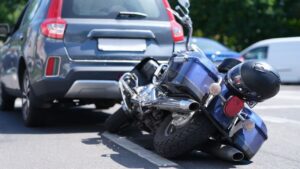
Motorcyclists must carry minimum liability insurance of $50,000 per person and $100,000 per accident for bodily injury, plus $10,000 for property damage. That covers the people you might injure, not your own medical bills.
If you are hit by a car, pickup, commercial truck, or other qualifying motor vehicle, you may still be able to claim no-fault PIP medical benefits through the at-fault driver’s policy.
An operator or passenger of a motorcycle who sustains injury arising out of an accident involving a motor vehicle must claim no-fault PIP benefits from insurers in a specific order of priority, starting with the insurer of the owner or registrant of the motor vehicle involved in the accident.
If no car is involved in your crash, such as a single-bike incident or a motorcycle-versus-motorcycle accident, you generally must rely on your health insurance or optional medical payments coverage. This is one reason many Michigan riders choose to add first-party medical benefits to their motorcycle policy, even though it is not required.
What Coverage Should You Consider Adding?
Beyond the minimum, riders often add coverage that fills the gaps left by the no-fault exclusion. Options include uninsured and underinsured motorist coverage, optional medical payments, and higher liability limits.
Talking with a licensed agent about your specific risk picture helps you make informed choices, especially if you ride often or carry passengers.
Is Lane Splitting Legal in Michigan?
No, lane splitting is illegal in Michigan. The Michigan Vehicle Code prevents lane splitting in MCL 257.660(5), which states that a person operating a motorcycle, moped, low-speed vehicle, electric personal assistive mobility device, or electric skateboard shall not pass between lines of traffic.
Lane filtering, which is the practice of slipping between stopped vehicles at a red light, is also prohibited. So is riding on the shoulder to bypass traffic.
A few related rules under the same statute are worth knowing:
- Motorcycles are entitled to full use of a lane, and other drivers cannot crowd a rider out of it.
- Two motorcycles may ride side by side, but no more than two abreast in a single lane.
- Riders must remain within a single lane when passing.
If you are caught lane splitting and a crash follows, that decision can affect how fault is shared in your case. Michigan uses comparative fault rules, so a percentage of fault assigned to the rider can reduce or even bar a recovery for pain and suffering.
Rules of the Road That Apply to Motorcycles
Most standard traffic laws apply equally to motorcycles, but a few sections of the Michigan Vehicle Code are written specifically for riders. Understanding them keeps you safer and makes any future claim stronger.
Passengers, Seats, and Footrests
A motorcycle must have a permanent, regular seat for the operator, and a separate seat for any passenger. Passengers must be able to rest their feet on assigned footrests or pegs. Carrying a passenger who does not fit these basic safety requirements is against the law.
Handlebars and Equipment
Michigan limits how high motorcycle handlebars can rise above the operator’s seat. Motorcycles must also be equipped with working headlights, taillights, brake lights, mirrors, and a horn. These rules exist because visibility and control matter more on two wheels than four.
Headlight Use During the Day
In Michigan, motorcycles built after a certain date are required to have headlights that come on automatically when the engine starts. Daytime headlight use sharply reduces the number of drivers who claim they “never saw” the motorcycle, a phrase that comes up in nearly every left-turn crash.
What Happens When a Driver Hits a Motorcyclist?
When a driver hits a motorcyclist in Michigan, two things usually happen at once: the rider needs medical care, and a complicated insurance puzzle begins. Because motorcycles sit outside the no-fault system, the order in which insurance companies pay can be confusing.
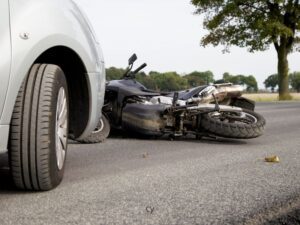 If a car or truck caused the crash, the rider can usually pursue PIP medical benefits through the involved driver’s insurer first. The rider can also bring a separate claim against the at-fault driver for pain and suffering, lost wages, and other damages.
Unlike standard auto cases, the verbal threshold for non-economic damages does not apply in the same way to motorcyclists, which can make full recovery more accessible.
If the at-fault driver is uninsured or fled the scene, the rider may need to look to their own uninsured motorist coverage, their health insurance, or the Michigan Assigned Claims Plan, depending on the circumstances.
Special Rules for Younger Riders and Mopeds
Riders under 18 face additional rules. They must complete a motorcycle safety course before the endorsement is added to their license, and they cannot carry passengers while operating under a temporary permit. Parents and guardians can be held responsible for knowingly allowing a child to ride in violation of these laws.
Mopeds follow a separate set of rules. Operators under 19 must wear a helmet on public roads, and moped riders without a regular driver’s license need a special restricted moped license. Although mopeds may feel like motorcycles, they are treated differently under Michigan law, especially when it comes to where they can be operated and how fast they can travel.
FAQs about Michigan Motorcycle Laws You Should Know
Below are answers to common questions riders ask about motorcycle laws in Michigan. These answers offer general information and are not a substitute for advice about your own situation.
A passenger 21 or older may ride without a helmet only if they carry at least $20,000 in first-party medical benefits of their own, in addition to the operator’s required coverage. Passengers under 21 must always wear a DOT-approved helmet, regardless of the operator’s age or coverage.
Most motorcycle injury claims in Michigan must be filed within three years of the crash, although certain claims involving public entities or no-fault benefits may have much shorter notice deadlines. Because some deadlines run in months rather than years, it makes sense to ask a lawyer about timing soon after the crash so no rights are lost.
It can. Even when a helmet is optional, the insurance company may argue that head or neck injuries would have been less severe with one. Michigan law has limits on how this argument can be used, but it still shows up in negotiations, which is why working with a knowledgeable attorney matters.
Yes, in many cases. Michigan follows a modified comparative fault rule, which means a rider can recover damages as long as their share of fault is not greater than the other party’s. Their recovery for pain and suffering may be reduced by their percentage of fault, and certain limits apply if fault crosses the halfway point.
Yes, if the crash involves injury, death, or property damage to an apparent value of $1,000 or more, Michigan law requires that it be reported to police. A police report is also one of the most useful pieces of early evidence, even when the rider feels okay at the scene.
Not exactly. ATVs and off-road vehicles fall under a separate part of Michigan law that covers ORVs, with its own licensing, registration, and helmet rules. If you ride both a street motorcycle and an ATV, it is worth knowing the rules for each, since insurance coverage and rights after a crash can look very different.
You may still have options. Uninsured motorist coverage on your own policy, your health insurance, and the Michigan Assigned Claims Plan may all come into play. An attorney can help map out which sources of recovery apply to your specific facts.
Talk With a Michigan Motorcycle Accident Attorney Today
If you or someone you love has been hurt in a motorcycle crash, you do not have to figure out the law on your own. At Christensen Law, we have stood up for injured riders across Michigan since 1991, from Detroit and Southfield to Ann Arbor, Troy, and Grand Rapids.
We listen carefully, protect your rights against insurance companies, and fight to win the compensation you deserve.
Our trial record includes a $9.5 million verdict in a motorcycle accident case, a result built on thorough investigation and a willingness to take the matter all the way to trial.
Call us today at 248-600-4591 for a free, no-pressure consultation, and let us help you take the next step toward recovery. We work on a contingency basis, so you pay nothing unless we win your case.