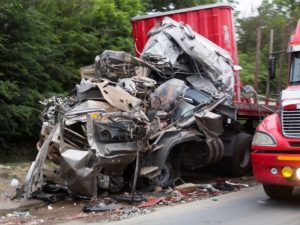




Truck accident cases are not bigger versions of car accident cases. The vehicles weigh more, the injuries are worse, the regulations are federal, and the defendants come prepared with rapid-response teams that arrive at crash scenes within hours.
If you are reading this after a collision with a commercial truck in Michigan, or you are helping a family member who was hurt or killed in one, this resource walks through how these cases actually work — from the first 48 hours through trial.
This is a resource, not legal advice. Every case turns on its specific facts, and Michigan’s no-fault system creates wrinkles that do not exist in most other states. When you reach a point where you need a decision made about your situation, talk to an attorney who handles commercial truck litigation.
What This Resource Covers
This page is built for three readers: people recently injured in a truck crash who do not yet know what to do, family members handling a wrongful death claim, and people already in the claims process who want to understand what is coming next.
It covers Michigan-specific rules, federal trucking regulations that drive liability, the evidence that wins these cases, how settlements and verdicts are calculated, and how the litigation timeline actually unfolds.
Table of Contents
- Why Truck Cases Are Different from Car Cases
- What to Do After a Truck Accident
- Evidence Preservation and the Spoliation Letter
- Common Causes of Truck Accidents
- Liability: Who Can Be Sued
- Federal Regulations That Drive Trucking Liability
- Proving Fault: The Evidence That Wins These Cases
- Damages: What a Truck Accident Lawsuit Can Recover
- Michigan’s No-Fault System and Truck Cases
- Comparative Negligence in Michigan
- Statute of Limitations
- How a Truck Accident Lawsuit Unfolds
- Negotiating With Insurance Companies
- Attorney Fees and Costs
- Litigation Funding and Pre-Settlement Funding
- Choosing a Truck Accident Attorney
- Frequently Asked Questions about Truck Accident Lawsuits in Michigan
- Talk to a Michigan Truck Accident Attorney
Why Truck Cases Are Different from Car Cases
A fully loaded tractor-trailer can weigh 80,000 pounds. A passenger car weighs roughly 4,000. That weight differential is why truck crashes produce a disproportionate share of catastrophic injuries — traumatic brain injuries, spinal cord damage, amputations, severe burns, and fatalities. The legal consequences flow from that physical reality.
Three things separate truck cases from ordinary auto cases:
- Federal regulation.
Interstate trucking is governed by the Federal Motor Carrier Safety Regulations (FMCSRs), enforced by the Federal Motor Carrier Safety Administration (FMCSA). These rules cover driver hours, vehicle maintenance, driver qualification, drug and alcohol testing, cargo securement, and dozens of other operational requirements. Violations create liability theories that do not exist against an ordinary motorist.
- Multiple defendants.
A single crash may involve the driver, the motor carrier, the truck owner (sometimes a separate entity), the trailer owner, the shipper, the broker, a maintenance contractor, and a parts manufacturer. Sorting out who is responsible — and who has the insurance to pay — is part of the case.
- Larger insurance policies.
Federal law requires interstate motor carriers hauling general freight to carry a minimum of $750,000 in liability coverage, with higher minimums for hazardous materials. Most carriers carry significantly more. The bigger the policy, the harder the defense fights.
Treating a truck crash like a routine fender-bender — calling your own insurer, giving a recorded statement, accepting an early offer — is how serious cases get undervalued before they ever really begin.
What to Do After a Truck Accident
The first decisions made after a truck crash often shape the rest of the case. The priority is medical care, but evidence preservation runs in parallel.
- Get medical attention immediately, even if you feel okay. Adrenaline masks injury. Internal bleeding, soft tissue damage, and traumatic brain injuries are not always obvious in the first hours. A gap in treatment also gives the insurance company an argument that your injuries were not serious or were caused by something else.
- Call the police and make sure a report is filed. In Michigan, crashes involving injury, death, or property damage over $1,000 must be reported. The UD-10 traffic crash report becomes a foundational document in your case.
- Photograph everything you safely can. Vehicle positions, debris fields, skid marks, cargo, the truck’s DOT number on the cab door, license plates, road conditions, traffic signals, weather, and your injuries. Photographs taken on the day of the crash carry weight that nothing else replaces.
- Get names and contact information for witnesses. Police reports often list only one or two witnesses. Bystanders disappear quickly.
- Do not give a recorded statement to the trucking company’s insurer. Their adjuster will call within days, sometimes hours. They are trained to ask questions designed to limit liability. You are not required to speak with them.
- Preserve your own vehicle and do not authorize repairs. The vehicle is evidence. Damage patterns help reconstruct the crash.
- Contact a truck accident attorney quickly. This matters more in trucking cases than in ordinary auto cases because of evidence preservation, which we cover next.
These steps are easier to read than to do in the hours after a serious crash. If you are reading this days or weeks later and missed some of them, that does not mean your case is lost — but it does mean evidence preservation becomes more urgent, not less.
Evidence Preservation and the Spoliation Letter
Trucking companies are required to preserve certain records, but the retention windows are short. Driver logs are often kept for only six months. Some electronic data is overwritten in a matter of weeks. Surveillance video from nearby businesses may be erased in 30 days or less.
A spoliation letter is a formal written demand that the trucking company preserve specific evidence. It should be sent as soon as possible. It typically asks the carrier to retain:
- The driver’s hours-of-service logs and electronic logging device (ELD) data
- The truck’s electronic control module (ECM) or “black box” data, which records speed, braking, throttle position, and other operational data in the seconds before a crash
- Driver qualification file, including application, motor vehicle records, road test, and medical certificate
- Drug and alcohol testing records
- Vehicle maintenance and inspection records
- Dispatch records and trip documentation
- Bills of lading and cargo manifests
- Onboard camera footage, if equipped
- Cell phone records for the driver
- Post-crash drug and alcohol test results
Without a spoliation letter, evidence routinely disappears. With one, destruction of evidence can support sanctions or an adverse inference at trial.
Common Causes of Truck Accidents
Cause matters because it points to who was negligent and what regulations were violated. The most common causes seen in litigation include:
- Driver fatigue. Despite federal hours-of-service rules, fatigued driving remains widespread. Drivers may falsify paper logs, and even electronic logs can be manipulated by running personal conveyance status improperly.
- Distracted driving. Texting, dispatch communications, and in-cab technology divert attention. Cell phone records often establish use at the moment of impact.
- Speeding and aggressive driving. A loaded truck needs roughly 40% more stopping distance than a passenger vehicle. Speed compounds every other risk.
- Impairment. Alcohol, prescription medications, and stimulants used to stay awake all show up in trucking cases.
- Inadequate training. New drivers placed in equipment they are not qualified to operate, or hauling cargo they were not trained to handle.
- Improper cargo loading or securement. Shifting loads cause rollovers. Unsecured cargo creates road hazards. Overloaded trucks have degraded braking and handling.
- Equipment failure. Brake failures, tire blowouts, and steering problems often trace back to skipped maintenance or ignored inspection findings.
- Negligent hiring and retention. Carriers who hire drivers with poor safety records, or keep drivers after multiple violations, expose themselves to direct claims for negligence.
In most serious cases, more than one of these factors is in play — a fatigued driver in a poorly maintained truck, or a speeding driver hauling improperly secured cargo. Identifying every contributing cause is what builds the full liability picture against every responsible party.
Liability: Who Can Be Sued
Identifying defendants is more involved than in a passenger-vehicle case. Multiple parties may share responsibility.
The Driver
The driver is almost always a defendant. Driver negligence includes the obvious — speeding, following too closely, failing to yield — and the regulatory: driving over hours, falsifying logs, driving while disqualified, or operating under the influence.
The Motor Carrier
The trucking company can be liable two ways. First, vicariously for the driver’s negligence under the doctrine of respondeat superior, when the driver was acting within the scope of employment.
Federal regulations and case law often make this attachment difficult for carriers to escape, even when they classify drivers as independent contractors. Second, directly for the carrier’s own negligence — negligent hiring, negligent training, negligent supervision, negligent retention, negligent maintenance, or negligent entrustment of equipment.
Independent Contractor Misclassification
Many carriers label drivers as independent contractors to limit liability. Under federal “logo liability” rules and the statutory employee doctrine, however, a carrier whose name and DOT number appear on the truck typically remains responsible for the driver’s negligence regardless of the contractual label. Misclassification arguments rarely succeed for the carrier in litigation.
Other Potential Defendants
Beyond the driver and motor carrier, several other parties may share responsibility depending on what caused the crash. Identifying them early matters because each comes with its own insurance coverage and its own evidence to preserve.
- Truck or trailer owner, if different from the carrier
- Maintenance contractor, if mechanical failure played a role
- Shipper or loader, when improperly loaded cargo caused or contributed to the crash
- Broker, in some cases involving negligent selection of an unsafe carrier
- Parts manufacturer, when a defective component contributed
- Government entity, when road design or maintenance was a factor
Sorting out which of these parties belongs in a case requires investigation in the first weeks after the crash, before records are lost and before defendants start pointing at each other.
Federal Regulations That Drive Trucking Liability
Violations of the FMCSRs are powerful evidence of negligence. Several regulatory areas come up repeatedly.
- Hours of Service
Property-carrying drivers are limited to 11 hours of driving after 10 consecutive hours off duty, within a 14-hour on-duty window. Drivers cannot drive after 60 hours on duty in 7 consecutive days, or 70 hours in 8 consecutive days. ELDs were mandated for most carriers to make these limits enforceable. Hours-of-service violations — by the driver, or pressured by the dispatcher — are a recurring theme in fatigue-related crashes.
- Driver Qualification
Carriers must maintain a driver qualification file for each driver, including the application, the driver’s three-year motor vehicle record, the road test certificate, the medical examiner’s certificate, and the annual review of the driving record. Hiring a driver with a disqualifying record, or failing to perform required reviews, supports a negligent hiring claim.
- Drug and Alcohol Testing
Pre-employment, random, post-accident, reasonable suspicion, and return-to-duty testing are required. Post-accident testing is mandatory for any crash involving a fatality, and in other defined circumstances. Failure to test, or positive results, are highly relevant.
- Vehicle Maintenance and Inspection
Carriers must systematically inspect, repair, and maintain vehicles. Drivers must complete daily vehicle inspection reports (DVIRs). Skipped inspections, ignored defects, and falsified DVIRs surface in maintenance-related crashes.
- Cargo Securement
Detailed federal rules govern how different cargo types must be secured. Improperly secured loads that shift, fall, or cause rollovers create liability for whoever was responsible for loading.
When a regulatory violation is established and connects to the crash, it shifts the dynamic of the case substantially.
Proving Fault: The Evidence That Wins These Cases
Truck cases are evidence-driven. Reconstruction is more sophisticated than in a typical car crash because there is more data to work with.
- Black box (ECM) data records pre-crash speed, throttle position, brake application, cruise control status, and similar parameters. Most modern tractors record several seconds before any hard-braking or impact event. Downloading this data requires specialized equipment and should be done quickly.
- Electronic logging device data establishes the driver’s hours and duty status, often revealing fatigue or hours-of-service violations.
- Dashcam and onboard camera footage, when equipped, provides the cleanest possible record. Some systems capture both road-facing and driver-facing video.
- Cell phone records establish whether the driver was on a call or using data at the moment of impact.
- Driver qualification file and personnel records show what the carrier knew about the driver’s history and competence.
- Maintenance records and DVIRs reveal known defects and skipped repairs.
- Dispatch records, bills of lading, and trip documentation establish what the carrier was asking the driver to do, including delivery deadlines that may have pressured fatigued or speeding driving.
- Expert witnesses translate this evidence for a jury. A typical truck case may involve an accident reconstructionist, a trucking industry safety expert, a human factors expert, a biomechanical engineer, treating physicians, a life care planner for catastrophic injuries, and an economist for lost earnings and future losses.
The carriers and their insurers know exactly what this evidence shows, which is why so much of it disappears or becomes “unavailable” when no one demands it in writing early on. Getting the right preservation requests out in the first days is often the difference between a provable case and a guess.
Damages: What a Truck Accident Lawsuit Can Recover
Damages in Michigan truck cases fall into two main categories: economic and non-economic. In wrongful death cases, additional categories apply.
Economic Damages
These are quantifiable financial losses:
- Medical expenses — past and future, including hospitalization, surgery, rehabilitation, prescriptions, assistive devices, and home modifications
- Lost wages — income lost during recovery
- Loss of earning capacity — diminished ability to earn going forward, often a much larger figure than past lost wages in catastrophic injury cases
- Property damage — vehicle and personal property
- Out-of-pocket costs — transportation to medical appointments, in-home care, and similar expenses
Non-Economic Damages
These compensate for human losses that do not have a price tag:
- Pain and suffering — physical pain caused by the injuries
- Mental and emotional distress — anxiety, depression, PTSD, fear of driving
- Loss of enjoyment of life — the inability to do things that mattered before the crash
- Disfigurement and scarring
- Permanent disability — long-term limitations on daily function
- Loss of consortium — a separate claim by the injured person’s spouse for loss of companionship, services, and intimacy
Wrongful Death Damages
Under Michigan’s wrongful death statute, recoverable damages include conscious pain and suffering of the decedent before death, reasonable medical and funeral expenses, and the loss to surviving family members of financial support, services, gifts, society, and companionship.
Exemplary and Punitive Considerations
Michigan does not allow punitive damages in the traditional sense, but exemplary damages may be available where the defendant’s conduct was particularly egregious.
For example, drunk or drugged driving, or knowingly putting an unfit driver behind the wheel may be considered grounds for exemplary damages. Cases involving gross corporate misconduct have driven so-called “nuclear verdicts,” with jury awards exceeding $10 million, that have reshaped the trucking industry’s approach to safety.
Michigan’s No-Fault System and Truck Cases
Michigan operates under a no-fault auto insurance system, and it applies to truck crashes involving passenger vehicles. The system has two layers that injury victims need to understand.
First-Party No-Fault Benefits (PIP)
Regardless of who caused the crash, your own auto insurance, or, in certain circumstances, the no-fault insurer assigned through the Michigan Assigned Claims Plan, pays Personal Injury Protection benefits. PIP covers:
- Reasonable medical expenses (subject to the medical fee schedule and the PIP coverage level you selected)
- Up to 85% of lost wages for up to three years, subject to a monthly cap
- Replacement services (help with household tasks you can no longer perform)
- Attendant care for catastrophic injuries
Since the 2019 reforms, Michigan drivers choose a PIP coverage level. People who selected lower limits or opted out (with qualifying health coverage) may have far less first-party coverage than they expect — a recurring problem in serious cases.
Third-Party Liability Claims
Separately, you can sue the at-fault driver and trucking company for damages PIP does not cover.
To recover non-economic damages (pain and suffering, etc.) under Michigan law, you must show the injury meets the threshold of serious impairment of body function, permanent serious disfigurement, or death. In commercial truck crashes, this threshold is usually met given the severity of typical injuries.
You can also recover excess economic loss, including medical expenses above PIP limits, lost wages beyond the 85%/three-year cap, and future losses, through the third-party claim.
UM/UIM Coverage
Uninsured and underinsured motorist coverage on your own policy can be critical when a trucking defendant’s coverage is somehow insufficient or contested. Coverage stacking and policy interpretation in trucking cases can be complex.
Comparative Negligence in Michigan
Michigan uses modified comparative negligence. If your share of fault is 50% or less, you can recover damages reduced by your percentage of fault. If your share is 51% or more, you cannot recover non-economic damages (pain and suffering), though economic damages may still be available with a similar reduction.
Defense attorneys routinely try to push the plaintiff’s percentage upward — which is why thorough crash reconstruction matters.
Michigan does not use pure contributory negligence, where any fault by the plaintiff bars recovery. That is the rule in only a handful of states.
Statute of Limitations
Michigan generally allows three years from the date of the crash to file a personal injury lawsuit, and three years from the date of death to file a wrongful death claim. PIP benefits have their own one-year notice requirement and a one-year-back rule on past benefits.
Claims involving government vehicles or government defendants have shorter notice periods, sometimes as short as 60 or 120 days. These deadlines are firm. Missing them generally ends the case regardless of merit.
How a Truck Accident Lawsuit Unfolds
Every case is different, but most follow a recognizable arc.
Investigation and Pre-Suit Phase (Months 1–6)
Spoliation letters go out. Evidence is collected. Medical treatment proceeds. The attorney works with experts to evaluate liability and damages. PIP benefits are claimed and often disputed. Insurance coverage is identified across all potential defendants.
Demand and Settlement Discussion (Months 6–12)
Once the medical picture is reasonably clear — or when the statute of limitations approaches — a demand letter is typically sent to the defense. The demand lays out liability, damages, and the settlement amount sought. Some cases settle here, particularly when liability is clear and damages are well-documented.
Filing Suit (Year 1)
If pre-suit negotiation does not resolve the case, suit is filed. The complaint is served on each defendant. Defendants answer, often with affirmative defenses asserting comparative fault.
Discovery (Months 12–24)
Both sides exchange documents, take depositions of parties, witnesses, and experts, and serve written discovery. This is the longest phase and often the most expensive. Trucking defendants frequently resist producing internal records; motion practice is common.
Mediation and Settlement Conferences (Year 2)
Most courts require mediation. A neutral mediator works with both sides to find a number both can accept. Many cases settle at or shortly after mediation, when both sides have a clear view of the evidence.
Trial (Year 2–3)
Cases that do not settle proceed to trial. A typical truck case trial runs one to three weeks, with multiple expert witnesses on each side. Verdicts can be appealed, which adds further time before any payment is collected.
Arbitration
Some cases — particularly those subject to arbitration clauses or chosen by the parties — go to binding arbitration instead of jury trial. Arbitration is generally faster but limits appeal rights.
Negotiating With Insurance Companies
Trucking insurers send rapid-response teams to crash scenes. Their adjusters and defense lawyers begin building the defense case before victims have left the hospital. Several patterns recur:
- Early lowball offers before the full extent of injuries is known
- Recorded statements designed to lock victims into incomplete or inaccurate accounts
- Medical records reviews looking for pre-existing conditions to blame
- Surveillance of injured plaintiffs to challenge the severity of claimed injuries
- Delay as a pressure tactic when victims are facing medical bills and lost income
Effective negotiation requires preparation, full documentation of damages, and the credible threat of trial. Insurers track which firms try cases and which always settle; that history affects offers.
Attorney Fees and Costs
Personal injury attorneys, including truck accident attorneys, almost universally work on a contingency fee basis. The client pays no attorney fees unless the case results in recovery. The standard contingency fee in Michigan personal injury cases is generally one-third of the recovery, though it can vary by stage (lower for pre-suit settlement, higher if the case goes to trial or appeal).
Case costs, which can include expert witness fees, deposition costs, medical record fees, court filing fees, and similar expenses, are typically advanced by the firm and reimbursed from the recovery. In a serious truck case, costs can run into six figures because of expert and reconstruction work. Initial consultations are typically free.
Litigation Funding and Pre-Settlement Funding
Some clients facing financial pressure during a long case consider pre-settlement funding — advances from third-party funders against the future recovery. These advances often come at a high cost, with effective interest rates that can substantially reduce the net recovery.
They can be a useful bridge in some situations and a costly mistake in others. Discuss any funding decision with your attorney before signing.
Choosing a Truck Accident Attorney
Not every personal injury attorney handles trucking cases. The right questions to ask include:
- How many commercial truck cases has the firm tried to verdict?
- Does the firm have established relationships with trucking experts, reconstructionists, and life care planners?
- How will the firm preserve evidence in the early days?
- What is the fee structure, and how are costs handled?
- Who at the firm will actually work on the case?
Trial experience matters even if the case settles. Insurers offer more to firms with a track record of trying — and winning — these cases.
Frequently Asked Questions about Truck Accident Lawsuits in Michigan
These are the questions that come up most often in early conversations with truck crash victims and their families. Answers here are general; the specifics of your case may change how any of them apply.
Case value depends on the severity of injuries, the strength of liability evidence, available insurance, and the jurisdiction. Truck cases involving catastrophic injuries and clear regulatory violations have produced verdicts and settlements in the millions and tens of millions of dollars.
Minor injury cases settle for much less. No attorney can responsibly value a case before reviewing the medical and liability evidence.
Most truck cases resolve within 18 months to 3 years. Cases that settle pre-suit can finish faster. Cases that go to trial, particularly with appeals, can take longer. The complexity of injuries, the number of defendants, and the carrier’s willingness to negotiate all affect timeline.
Yes, as long as your share of fault is 50% or less under Michigan’s modified comparative negligence rule. Your damages are reduced by your percentage of fault. If you are 51% or more at fault, you cannot recover non-economic damages.
The carrier whose name and DOT number appear on the truck typically remains responsible under federal “logo liability” rules and the statutory employee doctrine, regardless of the contractor label. Misclassification rarely shields the carrier in litigation.
A “nuclear verdict” is a jury award exceeding $10 million. They have become more common in commercial trucking cases over the last decade, particularly when juries see evidence of corporate decisions that prioritized profit over safety. They influence settlement value across the industry, even in cases that never see a courtroom.
Most cases settle without trial. Settlement may happen at any stage — pre-suit, during discovery, at mediation, or even during trial. Whether your case actually goes before a jury depends on whether the defense offers a number that fairly reflects the case. Preparing as if trial is coming is what produces strong settlement offers.
A wrongful death claim can be brought by the personal representative of the estate, on behalf of statutorily defined beneficiaries. Recoverable damages include the decedent’s conscious pain and suffering before death, medical and funeral expenses, and the survivors’ losses of support, services, society, and companionship. The same three-year limitations period generally applies.
Federal law and the long reach of personal jurisdiction over interstate carriers usually allow Michigan crashes to be litigated in Michigan courts, even against out-of-state carriers. Most cases involving Michigan crashes proceed in Michigan.
Sooner is better, primarily because of evidence preservation. Some trucking records are routinely destroyed within 30 to 180 days. The legal deadline (statute of limitations) is generally three years, but waiting that long usually means losing critical evidence.
Talk to a Michigan Truck Accident Attorney
If you or a family member was hurt or killed in a crash with a commercial truck in Michigan, getting evidence preserved early can make a significant difference in your case. Christensen Law has handled trucking cases across the state since 1991, with offices in Southfield, Detroit, Ann Arbor, Troy, and Grand Rapids.
Consultations are free, and there is no fee unless we recover for you. Call the office nearest you, or reach out through the contact page to schedule a free case review.
- Southfield, MI (Headquarters) — 248-600-4591
- Detroit, MI — 313-546-1091
- Grand Rapids, MI — 616-512-0718
- Ann Arbor, MI — 734-519-7576
- Troy, MI — 248-233-0684