

A driver looking at a phone instead of the road can cause a crash that changes everything for the family in the next lane. Distracted driving crashes are preventable, and the people hurt by them deserve real accountability.
At Christensen Law, our Detroit distracted driving accident lawyers investigate what pulled the other driver’s attention away, prove it, and pursue the full compensation Michigan law allows.
We focus on serious motor-vehicle injury, and we build every case as if it will be decided by a jury. That approach tells the insurance company that we are ready to prove exactly what the distracted driver did and why it matters.
If a distracted driver injured you or someone you love, call us at (248) 900-9000 to talk to a distracted driver crash attorney in Detroit about your case.
CHRISTENSEN LAW HAS A 24 HOUR RAPID RESPONSE SERVICE
Why Work With Christensen Law After a Distracted Driving Crash
Proving distraction takes more than saying the other driver was on a phone, so the firm you choose makes a difference. Here is what our clients rely on:
- We move quickly to preserve phone records, vehicle data, and video before it is gone.
- We prepare each case for trial, which pushes insurers toward fair settlements.
- We concentrate on serious and catastrophic injuries, from traumatic brain injury to spinal cord damage.
- We handle the insurer and the paperwork so you can focus on getting better.
Our cell phone accident lawyers in Detroit treat every client like family and handle cases across Michigan from our Detroit office. Reach out today and let us start building your case.
What Counts as Distracted Driving in Michigan?
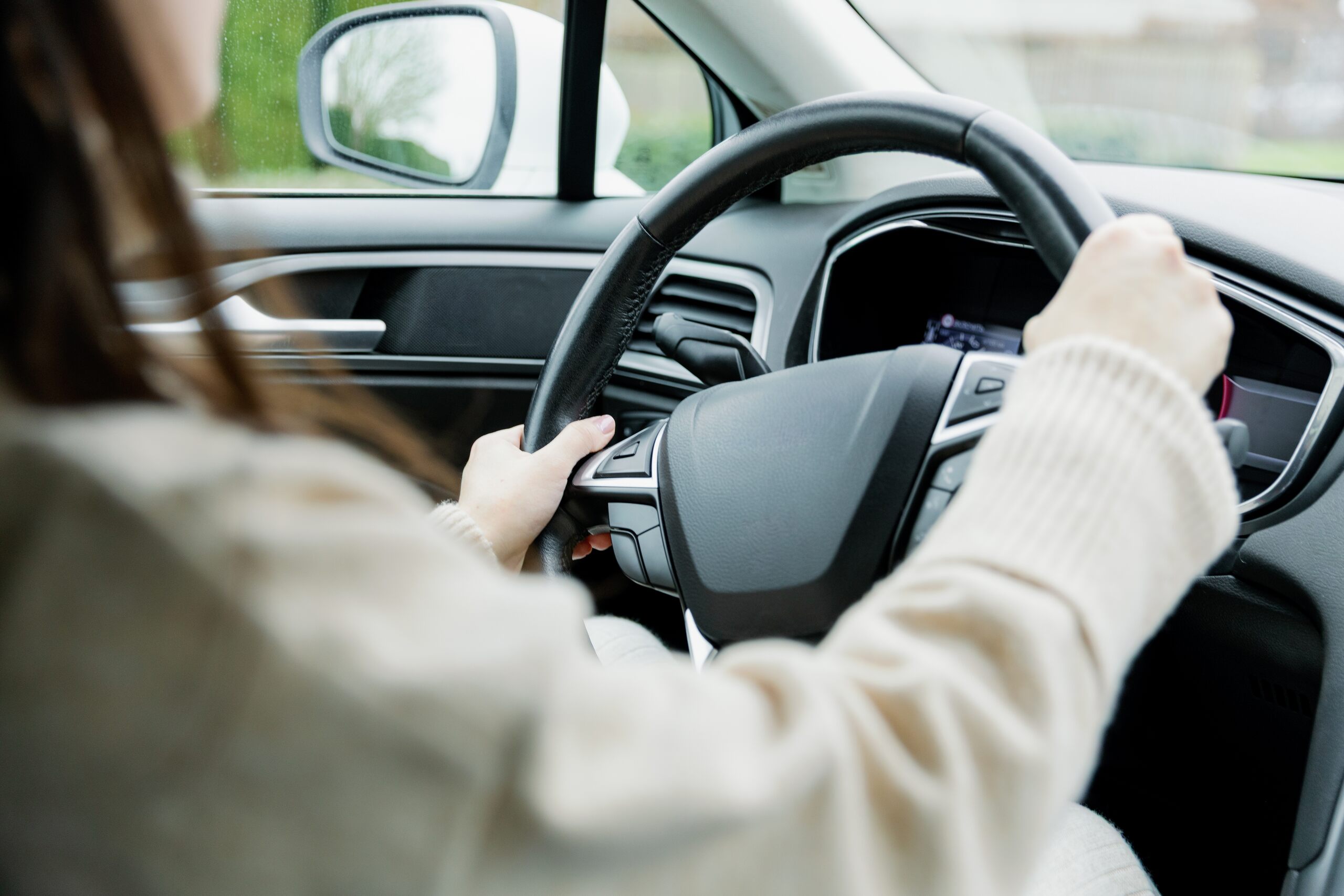
Distracted driving is any activity that takes a driver’s attention off the road, and Michigan law now treats handheld phone use as a primary offense. As the National Highway Traffic Safety Administration describes it, distraction comes in three forms: taking your eyes off the road, your hands off the wheel, or your mind off driving. Texting manages to do all three at once, which is what makes it so dangerous.
Common forms of distraction we see in Detroit crashes include:
- Texting, emailing, or scrolling social media behind the wheel.
- Holding a phone for a call instead of using hands-free mode.
- Setting a GPS route or watching video while driving.
- Eating, grooming, or reaching for objects in the vehicle.
Any one of these can pull a driver’s focus long enough to cause a serious wreck. When it does, that lapse becomes central to proving the other driver was at fault.
Is Texting and Driving Illegal in Michigan?
Yes. Texting and driving is illegal in Michigan, and the law goes further than texting alone. Michigan’s hands-free law, MCL 257.602b, took effect on June 30, 2023, and it bars drivers from holding or using a mobile electronic device while operating a vehicle. That includes making calls, reading or sending texts, watching video, and using social media on a handheld device.
The law allows hands-free and voice-operated use, such as a phone mounted on the dash or connected through the vehicle. Even so, a driver who was legally using hands-free mode can still be liable if that use contributed to a crash, because ordinary negligence still applies.
A violation of the hands-free law can also serve as powerful evidence in your injury claim. When a driver breaks a safety statute and causes harm, that fact helps establish fault.
How Do You Prove the Other Driver Was Distracted?
You prove distraction with evidence that shows where the driver’s attention was in the seconds before impact. Drivers rarely admit they were on a phone, so we build the proof from independent sources.
The evidence we pursue often includes:
- Phone and cellular records that show calls, texts, or data use at the time of the crash.
- Vehicle data recorders that capture speed, braking, and steering inputs.
- Traffic and business surveillance video from the area of the crash.
- Witness statements describing what the driver was doing.
- The police report and any citation issued at the scene.
We often need to act fast and send legal preservation requests before records are deleted. Pulling these threads together is how a suspicion of distraction becomes a provable fault.
Common Injuries in Distracted Driving Crashes
Distracted driving crashes are often high-speed, because the distracted driver never brakes or swerves in time. Without that last-second reaction, the impact carries its full force into the other vehicle. The result is frequently serious, lasting injury rather than a minor fender-bender.
The injuries we see most often in these cases include:
- Traumatic brain injuries from the head striking the wheel, dash, or window.
- Spinal cord injuries that can change how a person moves and feels.
- Fractures to the arms, legs, ribs, and pelvis.
- Neck and back injuries, including herniated discs and whiplash.
- Internal injuries that may not show symptoms right away.
Because brain, neck, and spinal injuries can develop over the days after a crash, prompt medical care and careful documentation are important. We make sure your injuries are recorded and valued for what they truly are.
Employers and Others Who May Share Responsibility
More than one party can be responsible for a distracted driving crash. When the at-fault driver was working at the time, the employer may share liability, and that can open additional insurance coverage. Delivery drivers, sales representatives, and commercial operators are common examples.
Other parties sometimes bear responsibility as well:
- An employer whose driver was distracted while working or handling work communications.
- A trucking company whose driver was using a device against safety rules.
- A vehicle owner who let an unsafe driver use the vehicle.
Identifying every responsible party matters because each one may carry insurance that helps cover your losses. We trace the crash back to everyone who played a part so no source of recovery is missed.
Michigan No-Fault and Your Distracted Driving Claim
Michigan’s no-fault system shapes how compensation works after a distracted driving crash. Your own policy provides personal injury protection, known as PIP, which pays reasonable medical care and a share of lost wages no matter who was at fault. To recover for pain and suffering, though, you must bring a separate claim against the distracted driver, and your injury must meet the serious impairment threshold under MCL 500.3135.
That threshold means the injury has to affect your general ability to lead your normal life. Serious injuries from a high-speed distracted driving crash frequently meet it.
Shared fault and your recovery
Michigan follows a modified comparative negligence rule, so if you were partly at fault, your recovery is reduced by your share rather than eliminated. If you are found more than 50 percent responsible, you cannot recover non-economic damages. Insurers sometimes try to pin part of the blame on the injured person, which is one more reason strong evidence of the other driver’s distraction matters.
The attorneys and staff there are amazing and really care about their clients where you're treated with care and not... Jason Waddell From the 1st interaction with Christensen Law it was a positive, wonderful experience! Dustin, Samantha and the entire staff, had... Susan Schroeder They took amazing care of my uncle after his accident. I would recommend then to anyone injured in an auto... Steve Huber They were well-versed in the intricacies of the law and provided me with clear explanations of my rights and legal... Shana Goodrich I presented to them a situation that was quite scary and financially overwhelming. David and his kind staff listened to... Wendy Henn Thanks to Dave, Stephanie, and Michelle for getting me through this hard time. I didn't know what to do, I... Tim Taylor Christianson Law stepped in after my motorcycle accident when another firm had dropped the ball—and they completely and very quickly... Erin Magee They were communicative, compassionate, made the process easy for me to understand. I was able to effectively receive a size-able... Wren Bell He, Samantha, and the entire staff at Christensen Law treated me like family, demonstrating kindness, expertise, and a genuine interest... Janelle Garza The Christensen Law firm, compassionate approach to my injuries. Their attentive listening, and thorough understanding are truly commendable I highly... Mr. Douglas Whole team of Christensen law is amazing and wonderful from start to finish. They often contact me to see how... Amandeep Sohal From start to finish, the entire team was professional, compassionate, and dedicated to achieving the best possible outcome for me.... Gjon Ivezaj I recommend all of my friends and family to Christensen Law.
 Excellent!
 Christensen Law’s attorneys are filled with compassion and knowledge
The team at Christensen Law impressed me with their vast knowledge and experience in handling...
 It is with extreme gratitude and positive emotions that I write about my relationship with...
If it wasn't for Christensen Law, I don't know where I would be today.
 My name is Erin, my experience with Christensen Law was Overwhelming… But in the very...
I hired this law firm after being hit by a drunk driver in my of...
 From the moment I spoke with Dustin, I felt like I was in good hands
I am extremely pleased with the experience I had with this law firm, and their...
 I was in difficult time in my life, it’s a great to know I have...
I had an excellent experience working with Christensen Law on my settlement case.
What Compensation Can You Recover?
You can recover compensation for both the financial and the personal toll of a distracted driving crash. The value of a claim depends on how serious the injuries are and how they affect your life going forward.
The losses we commonly pursue include:
- Medical bills, from emergency care through long-term treatment and therapy.
- Wage loss beyond what no-fault benefits pay.
- Pain, suffering, and loss of enjoyment of life.
- Attendant care for help with daily needs during recovery.
- Vehicle damage not covered by your own policy, through Michigan’s mini-tort provision.
Each of these has to be documented and defended against an insurer trying to minimize it. We build the record that supports every part of your claim, and our Detroit car accident team handles that work from start to finish.

Deadlines You Cannot Afford to Miss
Michigan sets firm deadlines on car accident claims, and letting one pass can end even a strong case. The clocks start running at the time of the crash, so early action protects your rights.
Two deadlines matter most:
- The one-year rule for PIP benefits under MCL 500.3145 limits how far back you can claim no-fault losses.
- The three-year limit for injury lawsuits under MCL 600.5805 runs from the date of the crash.
Beyond the deadlines, the evidence that proves distraction can disappear within weeks. Contacting a lawyer early gives us time to preserve phone records and video before they are gone. Distraction is a factor in many serious crashes, including those involving commercial trucks, which is why the causes behind big-rig wrecks so often trace back to inattention.
FAQs Answered by Our Detroit Distracted Driving Accident Lawyers
Below are answers to questions we hear from people injured by distracted drivers around Detroit.
Phone and cellular records often show whether a driver was texting or using data at the moment of the crash. We can request those records through the legal process, and we pair them with vehicle data and witness accounts. Together, that evidence can show what the driver was doing when the collision happened.
Hands-free use is generally legal, but it does not give a driver a pass on causing a crash. If the driver was still not paying attention, ordinary negligence rules apply and the driver can be held responsible. We look at the full picture rather than just whether the phone was in a mount, drawing on the causes commonly seen in serious Michigan crashes.
A citation for violating the hands-free law can be strong evidence of fault. It shows the driver broke a safety statute, which supports your claim that the driver caused the crash. It is not the whole case, but it helps, and we build the rest of the proof around it.
You may still recover under Michigan’s comparative negligence rule, which reduces your recovery by your share of fault rather than barring it, unless you are more than half responsible. We work to keep the fault accurately assigned. An honest look at the facts usually shows the distracted driver bears most or all of the blame.
As soon as you reasonably can. The phone records, video, and vehicle data that prove distraction can be erased or overwritten within a short time. Reaching out early lets us send preservation requests and lock down the evidence before it disappears.
No. Many distracted driving claims settle, but we prepare each one for trial from the start. That readiness often leads to better settlements, because insurers know we can prove distraction to a jury. If the insurer will not offer a fair amount, we are prepared to try the case.
Contact a Detroit Distracted Driving Accident Lawyer
A distracted driver made a choice that hurt you, and you deserve a firm that will prove it and hold that driver accountable. Christensen Law will investigate the crash, preserve the evidence, and prepare your case for trial while you focus on healing. We handle car accident claims across Michigan and give each client our full attention.
Call Christensen Law today at (248) 900-9000 to speak with a Detroit distracted driving accident lawyer about your crash and your options.